
Balancing Heavy Loads: Risk-Based Forklift Safety and Continuous Improvement
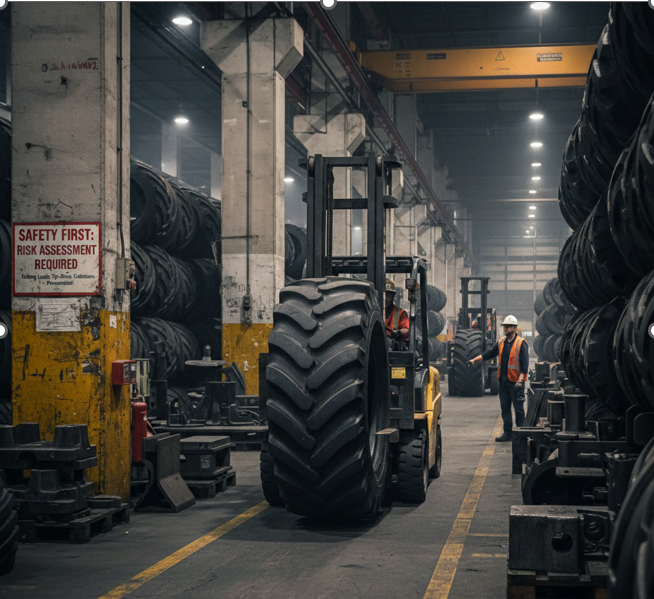
Balancing Heavy Loads: Risk-Based Forklift Safety and Continuous Improvement
Executive summary
This blog explores the pressing challenge of keeping forklift operations safe in heavy‑industry settings. In many supply and logistics hubs, forklifts move enormous tyres and industrial parts, yet many organisations still lack a risk-based safety framework. The absence of a formalised approach increases the likelihood of injuries from falling loads, tip‑overs, or collisions. Recent safety investigations in Australia illustrate how forklift incidents continue to occur despite existing regulations, with multiple reports highlighting a steady rate of serious incidents and fatalities. These issues are not confined to one region; analyses of workplace accidents across various sectors show that forklifts remain involved in numerous serious incidents over many years.
A risk-based approach provides a structured method for managing hazards. By adopting the Plan‑Do‑Check‑Act (PDCA) cycle, organisations can systematically assess risks, implement interventions, monitor outcomes, and refine procedures. The hierarchy of controls – prioritising elimination, substitution, engineering solutions, administrative measures and personal protective equipment – helps organisations choose the most effective safeguards. Research on occupational health and safety (OHS) shows that risk-based thinking enhances resource allocation, fosters continuous improvement and aligns with international standards. Studies on situational awareness indicate that monitoring an operator’s cognitive state can help reduce accidents.
This blog outlines the scope of forklift operations, defines the hazards, and explains why a risk-based approach is vital. It then describes the PDCA cycle, offers practical risk treatment recommendations based on the hierarchy of controls, and discusses the benefits of this methodology. Ultimately, implementing such a framework enables organisations to transform forklift safety from a reactive compliance exercise into a proactive strategy for continuous improvement. External sources support all claims, and no proprietary names or precise incident figures are mentioned.
Introduction
Forklifts are indispensable in warehousing, logistics, and heavy industry environments, where they handle bulky goods and heavy equipment. Without them, the timely movement of materials would grind to a halt. These vehicles are often customised to lift enormous loads, such as oversized tyres used in mining or large pieces of industrial machinery. Despite their utility, forklifts pose significant safety challenges. When operating on uneven surfaces or congested warehouse floors, even a slight miscalculation can result in a serious accident. Typical hazards include crush injuries from falling objects, tip‑overs caused by unbalanced loads, limited operator visibility, and collisions with pedestrians. A lack of consistent training, inadequate maintenance, and production pressures further compound these risks.
Industrial settings are particularly vulnerable because forklifts often interact with workers on foot. In warehouses where large tyres or other oversized items are stacked high, the operator’s field of vision can be severely restricted. This makes it challenging to spot coworkers or obstacles. Studies from safety authorities note that forklifts frequently cause injuries due to unstable loads, items blocking the operator’s view, or poorly maintained pallets. Excessive speed, improper braking, and horseplay exacerbate the dangers. These factors underline the need for organisations to develop a comprehensive framework that addresses both human and mechanical aspects of forklift operations.
This blog will outline how a risk-based safety approach can help organisations manage these hazards. By moving beyond compliance to proactive risk management, companies can protect workers while maintaining operational efficiency. The following sections define the scope of the safety issues, explain why a formal risk management plan is necessary, and detail the steps involved in implementing a structured safety system.
Scope
This blog focuses on forklift operations in environments where large, heavy items are loaded, unloaded and stored. Such settings include warehousing centres, logistics hubs and industrial sites. The primary hazards addressed are:
Crush injuries: Heavy loads can fall or shift unexpectedly, pinning workers or crushing limbs. When tyres or pallets are mishandled, the consequences can be severe.
Tip‑overs: Uneven floors, sloping ramps, or unbalanced loads can cause forklifts to overturn, potentially injuring the operator and damaging goods.
Visibility issues: Oversized cargo often obstructs the operator’s line of sight, increasing the risk of collisions with people or objects.
Collisions with pedestrians: Poorly segregated traffic routes, inadequate signage and lax speed control can lead to accidents involving workers on foot.
By narrowing the scope to these hazards, the blog emphasises the importance of managing mechanical, human and environmental factors. The discussion will not cover other heavy equipment risks, such as cranes or excavators, nor will it delve into the specific contractual requirements of any organisation. Instead, it highlights common safety challenges in forklift operations and generalises lessons applicable across industries.
Why is a risk-based safety framework needed?
Forklifts are ubiquitous in material handling, but their risks are often underestimated. Regulatory agencies have reported a persistent rate of forklift incidents, including serious injuries and fatalities. Industry analyses suggest that deaths associated with forklift operations have remained relatively steady over many years, indicating no significant improvement in safety outcomes. Many of these incidents involve machine operators and drivers, placing them among the most dangerous occupations in sectors such as logistics and manufacturing.
The persistent incident rate underscores the inadequacy of relying solely on compliance with minimum regulatory standards. Despite legal requirements for safety training, route segregation, and equipment maintenance, incidents still occur due to production pressures, complacency, or insufficient oversight. Work organisation factors, such as speeding up meeting deadlines, using inadequate tools, or assigning unsuitable tasks to workers, also contribute to accidents. These findings demonstrate that compliance alone does not guarantee safe operations; a comprehensive, dynamic safety system is essential.
A risk-based framework allows organisations to systematically identify hazards, assess their likelihood and potential severity, and implement controls that target the most significant risks. Such an approach ensures that resources are allocated effectively and that safety measures evolve as new hazards emerge. It also aligns with international standards such as ISO 45001, which require organisations to consider risks and opportunities when planning for occupational health and safety. By integrating risk-based thinking into forklift operations, companies can move from reactive incident response to proactive hazard prevention, ultimately reducing injuries and enhancing operational resilience.
Objectives
Assess hazards associated with forklift operations, focusing on the specific risks of handling oversized items.
Develop a structured risk-based approach using the PDCA cycle to manage and mitigate these hazards.
Recommend practical safety interventions aligned with the hierarchy of controls, which emphasises elimination, substitution, engineering measures, administrative actions and personal protective equipment (PPE).
Highlight the benefits of a risk-based safety system, including improved resource allocation, enhanced compliance, and a culture of continuous improvement.
By achieving these objectives, the blog aims to provide readers with a clear roadmap for improving forklift safety. Whether the reader is a warehouse manager, safety consultant or operator, the following sections will offer practical guidance grounded in evidence and aligned with recognised best practices.
Background: OHS issues in forklift operations
Forklifts present multiple occupational health and safety challenges. Studies from safety authorities and research organisations indicate that these vehicles are involved in a significant number of workplace incidents, often due to collisions, overturning, falling loads, or inadequate operator training. When forklifts operate in tight aisles or near pedestrian walkways, the risk of accidents increases. In one investigation, a major warehouse logged dozens of safety breaches within a single month, many of which were linked to high workloads and production pressures that led operators to cut corners on safety. While specific numbers vary by region and industry, the overall trend shows that forklift incidents have not significantly declined.
Several factors contribute to these incidents:
Production pressures and operational stress: Operators may rush tasks to meet quotas or deadlines, increasing the likelihood of mistakes or risky shortcuts.
Inadequate or outdated equipment: Forklifts or attachments that are not properly maintained or that lack modern safety features can fail at critical moments. Ageing equipment without regular servicing can lose braking power or have defective steering mechanisms.
Lack of proper tools and attachments: Using a standard forklift to handle large tyres or irregularly shaped loads can lead to instability and tip-overs. Without the appropriate attachment, loads may shift or fall.
Poor training and supervision: New operators may not fully understand safe lifting techniques or the importance of speed control, while experienced drivers might ignore protocols if they are not reinforced.
Improper assignment: Workers may be asked to operate forklifts without sufficient training or experience, leading to errors.
Operational behaviours also play a role. Travelling at excessive speed, carrying loads with the forks raised, improper backing or turning techniques, and engaging in horseplay all increase the risk of accidents. Furthermore, loads that are too heavy, unstable, or poorly stacked can collapse or obstruct the operator’s field of vision. These human and technical factors interact to create a complex risk landscape in forklift operations.
Risk factors in heavy‑equipment industries
Heavy‑equipment sectors face unique challenges. Forklifts in mining and similar industries handle huge items, and accidents frequently occur during maintenance and repair. Key causes include inadequate upkeep, which can lead to faulty brakes or worn tyres, and loss of control when operators misjudge load weight or use inappropriate attachments. Because the loads involved can weigh several tonnes, regulatory guidance stresses that risk assessments must account for the severe consequences of mishandling as well as the likelihood of an incident. Employers should identify hazards, evaluate risks and implement controls before undertaking such high-risk tasks.
Risk management: modern strategies and hierarchy of controls
Modern risk management emphasises a proactive approach and uses the hierarchy of controls to rank safety measures from most to least effective.
Eliminating a hazard, such as automating the movement of specific loads, is the preferred option. When that is not possible, substitution with safer equipment or techniques is the next best choice.
Engineering controls, like barriers that separate pedestrians from vehicles and sensors that detect obstacles, isolate people from hazards.
Administrative controls reshape the way people work by introducing procedures, speed limits, designated walkways and training programmes.
Personal protective equipment (PPE), including steel-capped boots and high-visibility clothing, provides a final layer of protection if other measures fail. For forklift operations, applying this hierarchy means prioritising design and engineering solutions before resorting to behavioural controls or PPE, and systematically evaluating each hazard to ensure the highest feasible control is chosen.
Elimination and substitution deserve special mention. Regulators emphasise that these controls are the most effective because they remove hazards at their source. Eliminating a hazard might involve redesigning a process so that manual lifting is no longer required or introducing automated guided vehicles to transport loads. Substitution could mean replacing a forklift with a crane or hoist when handling huge items. These strategies are most straightforward to implement at the design stage of a facility or process. Although they may entail higher upfront costs, they often yield long-term benefits by reducing exposure and simplifying downstream controls.
Risk-based thinking and its benefits
Risk-based thinking integrates hazard identification and continuous improvement into daily operations. Instead of reacting to incidents, organisations anticipate potential problems and address them early, using structured assessments to evaluate risks and the effectiveness of controls. Scholars note that this approach helps organisations manage increasing complexity by shifting emphasis from reactive measures to proactive management. It supports continuous improvement through iterative planning and evaluation cycles and encourages worker participation in identifying and mitigating hazards. Risk-based thinking aligns with standards such as ISO 45001, improving compliance and directing resources toward the most significant risks. Over time, it embeds safety considerations into everyday decisions and fosters a culture in which employees understand and support risk management.
The PDCA cycle: a structured approach
The Plan‑Do‑Check‑Act cycle, often referred to as the Deming cycle, is a four-step iterative method for continuous improvement. It was initially developed for quality management but has been widely adopted in safety management to enhance processes and reduce accidents. Each phase has a distinct purpose: planning defines goals and strategies; doing implements interventions; checking evaluates outcomes; and acting standardises successful practices or makes corrections.
Plan
The planning stage begins by identifying hazards and setting objectives for improvement. For forklift operations, this means analysing material flow, noting high-traffic zones and peak activity times, and considering environmental factors such as floor conditions and visibility. Based on this analysis, organisations develop standard operating procedures (SOPs) that outline safe lifting techniques, designated routes and emergency protocols. Risk assessments, using tools such as risk matrices, are performed to prioritise hazards according to their likelihood and potential impact. Clear responsibilities, timelines and resource allocations are then defined to ensure accountability.
Do
During the doing stage, planned measures are implemented. Warehouses may be reorganised to separate pedestrian and vehicle routes; barriers and signage are installed; and forklifts with suitable attachments are procured. Workers receive training on new procedures and the reasons behind them, and supervisors ensure that the measures are consistently applied. Documentation of training records, equipment purchases and maintenance activities provides a foundation for later evaluation. Operators are encouraged to report near misses and equipment malfunctions so that any shortcomings in the plan can be quickly addressed.
Check
In the checking phase, the organisation evaluates whether the measures are working. This evaluation relies on incident reports, near-miss data and worker feedback to gauge improvements and detect emerging issues. Research shows that monitoring human factors, such as situational awareness, can provide insights into operator performance. Still, most organisations rely on routine safety audits, observation checklists, and surveys to assess compliance and effectiveness. When data or feedback indicate that specific controls are ineffective or that new hazards have emerged, the organisation reviews the plan and decides on necessary adjustments.
Act
Finally, organisations act on the results by standardising successful practices and addressing deficiencies. Adequate controls become part of the permanent SOP, while ineffective or cumbersome measures are revised or replaced. Updated risk assessments capture new hazards or changes in the work environment. Because the PDCA cycle is iterative, each round feeds into the next, ensuring that safety practices evolve with changing technologies, processes and workforce dynamics.
Implementing the PDCA cycle in a warehouse context
The PDCA model can be tailored to any organisation. In a warehouse handling oversized items, success comes from focusing on a few key areas rather than compiling lengthy checklists. First, conduct a comprehensive risk assessment to identify hazards associated with loading and unloading heavy items. Tools such as job safety analyses and risk matrices help prioritise the most serious issues. Second, develop and communicate safe work procedures that outline proper lifting techniques, equipment selection, pedestrian management and emergency response. Training should ensure all workers understand these procedures and can demonstrate competence.
Third, invest in suitable equipment and workspace design. Forklifts equipped with attachments designed for specific loads, combined with clearly marked walkways and physical barriers, can significantly reduce the likelihood of collisions and tip‑overs. Fourth, maintain a regular inspection and maintenance schedule for forklifts, attachments and facility infrastructure to prevent mechanical failures. Finally, monitor performance and adjust the system based on incident reports, near-miss data and worker feedback. This cyclical process ensures that improvements are captured and integrated into everyday practice. By concentrating on these core elements, organisations can embed the PDCA cycle into their operations without creating an unwieldy list of separate tasks.
Risk treatment recommendations
A robust risk management strategy employs the hierarchy of controls. At the top of the hierarchy is elimination, which means redesigning tasks to remove the need for forklifts entirely—such as using automated conveyors, overhead cranes or pre-loaded containers—so human operators are no longer exposed to specific hazards. When elimination is not feasible, organisations should adopt engineering controls. This includes using forklifts equipped with purpose-built attachments for irregular loads, installing ramps and levellers with non-slip surfaces, and installing barriers or bollards that physically separate vehicle routes from pedestrian. Additional engineering measures involve enhancing visibility through mirrors, cameras and warning lights.
Administrative controls focus on how people work. They encompass developing and enforcing safe work procedures, setting speed limits and restricted zones, scheduling regular maintenance, and providing comprehensive training and supervision. Administratively, organisations should also implement systems for permits, inspections, and anonymous hazard reporting to ensure that issues are captured and addressed quickly. Finally, personal protective equipment—including steel-capped boots, high-visibility clothing, gloves and eye protection—provides a last line of defence. Although PPE cannot prevent incidents, it can reduce injury severity when other controls are bypassed or fail. By prioritising elimination and engineering controls and supporting them with administrative measures and PPE, organisations can comprehensively treat forklift-related risks while maintaining operational efficiency.
Benefits of a risk-based approach
Implementing a risk-based safety framework yields numerous advantages:
Proactive hazard management: By identifying and addressing hazards before incidents occur, organisations reduce the frequency and severity of accidents. This approach shifts safety from a reactive posture to a strategic activity.
Resource optimisation: Risk-based planning directs investment to areas with the highest potential for harm. Instead of spreading resources thinly, organisations can focus on controlling the most critical hazards, increasing the return on safety investments.
Compliance and reputation: Aligning with standards such as ISO 45001 ensures legal compliance and demonstrates a commitment to safety. This can enhance an organisation’s reputation with clients, regulators and employees.
Continuous improvement and innovation: The iterative nature of the PDCA cycle encourages ongoing evaluation and enhancement. As new technologies and techniques emerge, they can be integrated into existing safety systems, keeping practices current.
Employee engagement and culture: Involving workers in risk assessment and decision-making fosters a sense of ownership and accountability. When employees understand why specific controls are in place and see their suggestions implemented, they are more likely to adhere to safety protocols and contribute to improvement.
Studies highlight that organisations adopting risk-based thinking achieve notable safety improvements without necessarily requiring significant capital investments. The methodology can be scaled according to organisational size and industry, making it accessible to small and medium enterprises as well as large corporations.
Beyond these measurable outcomes, risk-based approaches also offer intangible benefits. When leaders visibly prioritise safety, workers feel valued, and morale improves. A proactive safety culture fosters open communication, trust and collaboration between management and employees. Fewer incidents lead to less downtime, lower insurance premiums and reduced disruptions to operations. Over time, these factors contribute to a positive reputation that helps attract and retain skilled workers and strengthens relationships with clients and regulators. Although these gains are more complicated to quantify than injury rates or compliance metrics, they are essential for building a resilient organisation that can adapt to future challenges.
Conclusion
Forklift operations are essential to modern supply chains, but they carry substantial risks. Persistent incident rates and recurring fatalities indicate that compliance alone is insufficient; organisations must adopt a comprehensive, risk-based approach to safety. This blog has described how such an approach can be structured using the Plan‑Do‑Check‑Act cycle and supported by the hierarchy of controls. By systematically identifying hazards, implementing targeted interventions, monitoring their effectiveness and refining strategies, organisations can transform safety from a static checklist into a dynamic, continuous improvement process.
Beyond compliance, risk-based thinking fosters a culture of vigilance and learning. It aligns with international standards and enables organisations to adapt to evolving technologies and work practices. By engaging employees, investing in appropriate equipment and designing safer environments, companies can drastically reduce the likelihood of tip‑overs, collisions and crush injuries, improving both safety and productivity. Although forklift operations in heavy‑industry settings will always carry inherent hazards, a risk-based framework ensures these hazards are managed intelligently and proactively, protecting workers and sustaining business operations.
Disclaimer
This content is provided for general information only and does not constitute legal or professional advice. While reasonable care has been taken in preparing this information, responsibility rests with the reader to seek advice specific to their individual circumstances. The author and publisher accept no liability for any loss, damage, or consequences arising from reliance on the information contained in this blog.
References
Camille, Y. (2024, April 2). Forklift Risk Assessment: A Comprehensive Guide for Enhanced Safety and Efficiency. https://teknectglobal.com/forklift-risk-assessment/
Industry Update. (2025, January 13). Manufacturing trends: Can new standards solve ongoing forklift safety issues? https://www.industryupdate.com.au/article/manufacturing-trends-can-new-standards-solve-ongoing-forklift-safety-issues
Maclean, C. G. (2022, September 1). Continuous improvement in action at Metform. MacLean-Fogg Company. https://macleanfogg.com/continuous-improvement-in-action-at-metform/?utm_source.com
Patel, P. M., & Deshpande, V. A. (2017). Application of Plan-Do-Check-Act cycle for quality and productivity improvement: A review. International Journal for Research in Applied Science & Engineering Technology (IJRASET), 5(1), 197-201. https://www.ijraset.com
Safe Work Australia. (2024, November). Forklifts - Information sheet. https://www.safeworkaustralia.gov.au/resources-and-publications/guidance-materials/forklifts-information-sheet
Safe Work Australia. (2024, November 14). Model Code of Practice: Managing risks of plant in the workplace. https://www.safeworkaustralia.gov.au/doc/model-code-practice-managing-risks-plant-workplace
Safe Work Australia. (2024, November 14). Model code of practice: How to manage work health and safety risks. https://www.safeworkaustralia.gov.au/doc/model-code-practice-how-manage-work-health-and-safety-risks
SafeWork NSW. (2023, April 6). NSW forklift safety report – February 2023. https://www.safework.nsw.gov.au/resource-library/forklifts/nsw-forklift-safety-report-february-2023?utm_source.com
SAI GLOBAL. (2024, October 15). The core role of risk management in workplace safety with ISO 31000. https://saiassurance.com.au
Worksafe Victoria. (n.d.). Forklift hazards and risk controls. WorkSafe Victoria. https://www.worksafe.vic.gov.au/forklift-hazards-and-risk-controls