
Have a question or planning a project? Contact our team for expert guidance and reliable support.
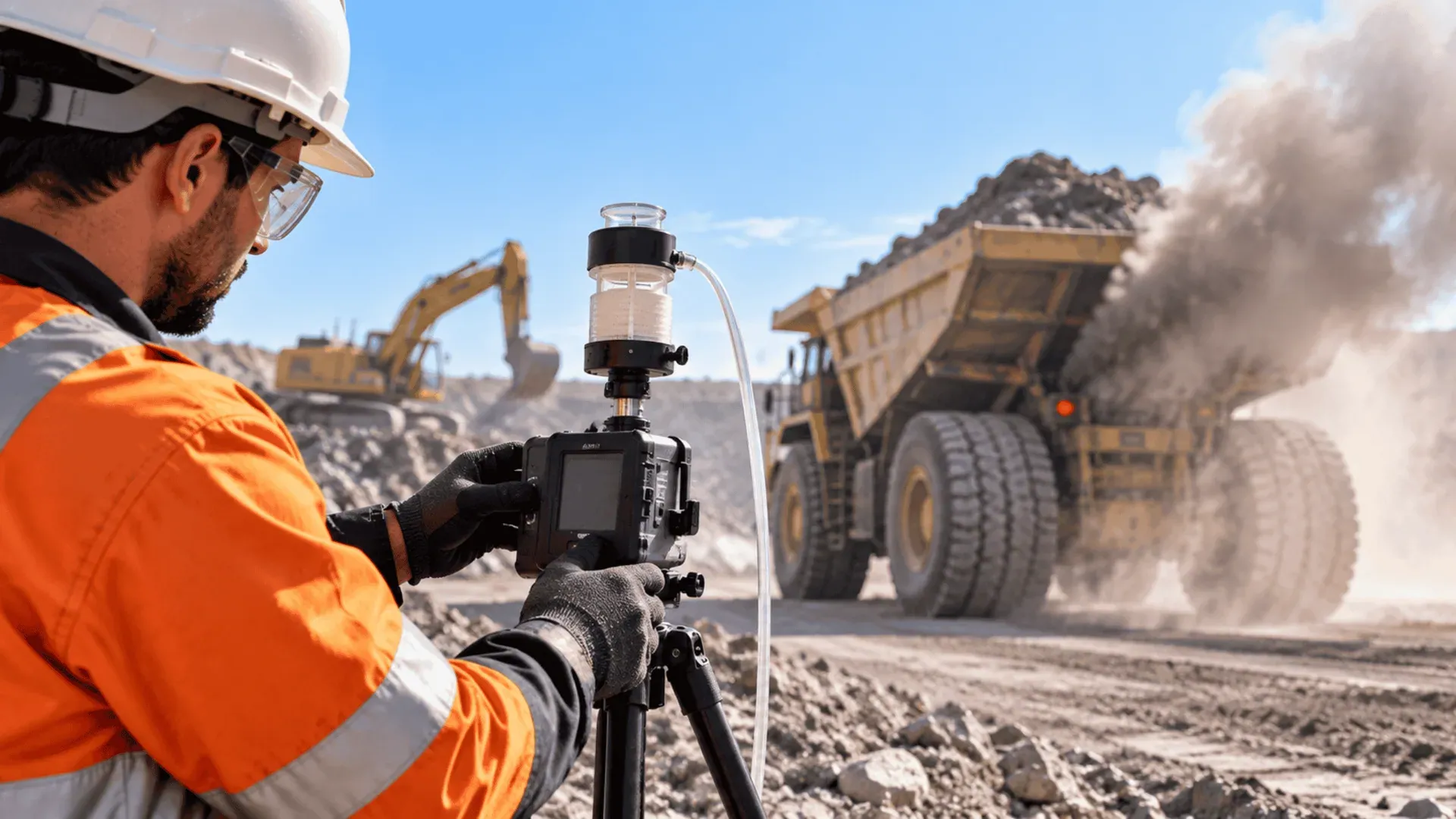
Diesel engines power much of the equipment used in mining, tunnelling, warehousing and construction. In enclosed or poorly ventilated spaces, the exhaust they produce builds up quickly. Diesel particulate matter has been classified as a Group 1 carcinogen by the International Agency for Research on Cancer. That puts it in the same category as asbestos and tobacco smoke.
Our DPM monitoring service measures worker exposure to diesel exhaust in your workplace and provides the data you need to implement effective controls.
We use personal sampling pumps with quartz fibre filters to capture diesel particulate matter from the breathing zone of exposed workers. Samples are analysed for elemental carbon and total carbon by NATA accredited laboratories using the NIOSH 5040 thermal optical method.
Elemental carbon is the primary marker for diesel exhaust exposure. We also measure total carbon to distinguish diesel sources from other carbonaceous materials in the workplace.
Underground mining is the most obvious environment. But DPM exposure is also a real risk in tunnelling operations, enclosed loading docks, vehicle maintenance workshops, bus depots and warehouses where diesel forklifts operate in confined areas.
Even outdoor construction sites can have localised DPM exposure issues around clusters of diesel powered equipment, especially in excavations or semi enclosed work areas.
Control strategies for DPM depend on the source and the environment. Options include improved ventilation, diesel particulate filters on equipment, switching to lower emission engines, operational changes like reducing unnecessary idling and in some cases transitioning to electric or battery powered equipment.
Where engineering controls cannot achieve acceptable exposure levels, respiratory protection becomes necessary. Our respirator fit testing service ensures the selected RPE provides adequate protection for each worker.
DPM monitoring is often part of a broader occupational hygiene program. Our air quality monitoring and dust exposure monitoring services address the other airborne hazards commonly found in the same work environments.
Engineering controls are the priority for managing DPM exposure. Ventilation design in enclosed environments like underground mines, tunnels and enclosed workshops needs to deliver adequate fresh air to all areas where diesel equipment operates. We work with ventilation engineers and contractors to assess whether existing ventilation systems deliver sufficient fresh air and dilute diesel exhaust to acceptable levels.
For underground mining operations, DPM management is governed by specific regulatory requirements in each jurisdiction. Western Australia, Queensland and New South Wales all have specific requirements for managing diesel exhaust in underground mines. We understand these requirements and help operations demonstrate compliance through monitoring and reporting programs.
The trend toward electrification of underground mining equipment is reducing DPM exposure significantly in many operations. Battery electric vehicles produce no diesel exhaust. As more operations transition to electric equipment, the nature of the occupational hygiene challenge changes but does not disappear entirely. Hybrid operations with both diesel and electric equipment still require careful exposure management for workers in diesel areas.
Fleet management also plays a role. Diesel equipment maintenance affects emission levels significantly. A poorly maintained engine produces substantially more DPM than a well maintained one. We advise on maintenance program standards and can help integrate DPM exposure management with fleet management systems.
Diesel particulate matter is the solid and liquid material in diesel exhaust. It consists primarily of carbonaceous particles (soot) along with absorbed organic compounds and trace metals. Fine DPM particles penetrate deep into the lungs and can cause respiratory disease. The International Agency for Research on Cancer classified diesel engine exhaust as a Group 1 carcinogen in 2012.
Safe Work Australia sets the workplace exposure standard for diesel particulate matter at 0.1 mg per cubic metre as elemental carbon, averaged over an 8 hour shift. Some underground mining regulators have adopted specific DPM exposure limits for their jurisdictions that may differ from the general standard.
Total carbon includes all carbonaceous material including both diesel soot (elemental carbon) and organic carbon from other sources like oil mists and organic dust. Elemental carbon is the specific marker for diesel exhaust. Using elemental carbon for DPM monitoring avoids overestimating diesel exposure in workplaces with other carbonaceous materials present.
Yes. While the risk is highest in enclosed spaces, outdoor workers on busy construction sites, in open cut mines or in other environments with high diesel equipment density can also have significant DPM exposure. We assess DPM risks in all work environments, not just underground operations.
Diesel oxidation catalysts and diesel particulate filters significantly reduce DPM emissions from equipment. Using biodiesel or biodiesel blends reduces some components of diesel exhaust. Transitioning to electric or battery powered equipment eliminates the source entirely. Ventilation dilutes remaining concentrations. These engineering controls are far more effective than respiratory protection alone.