
Have a question or planning a project? Contact our team for expert guidance and reliable support.
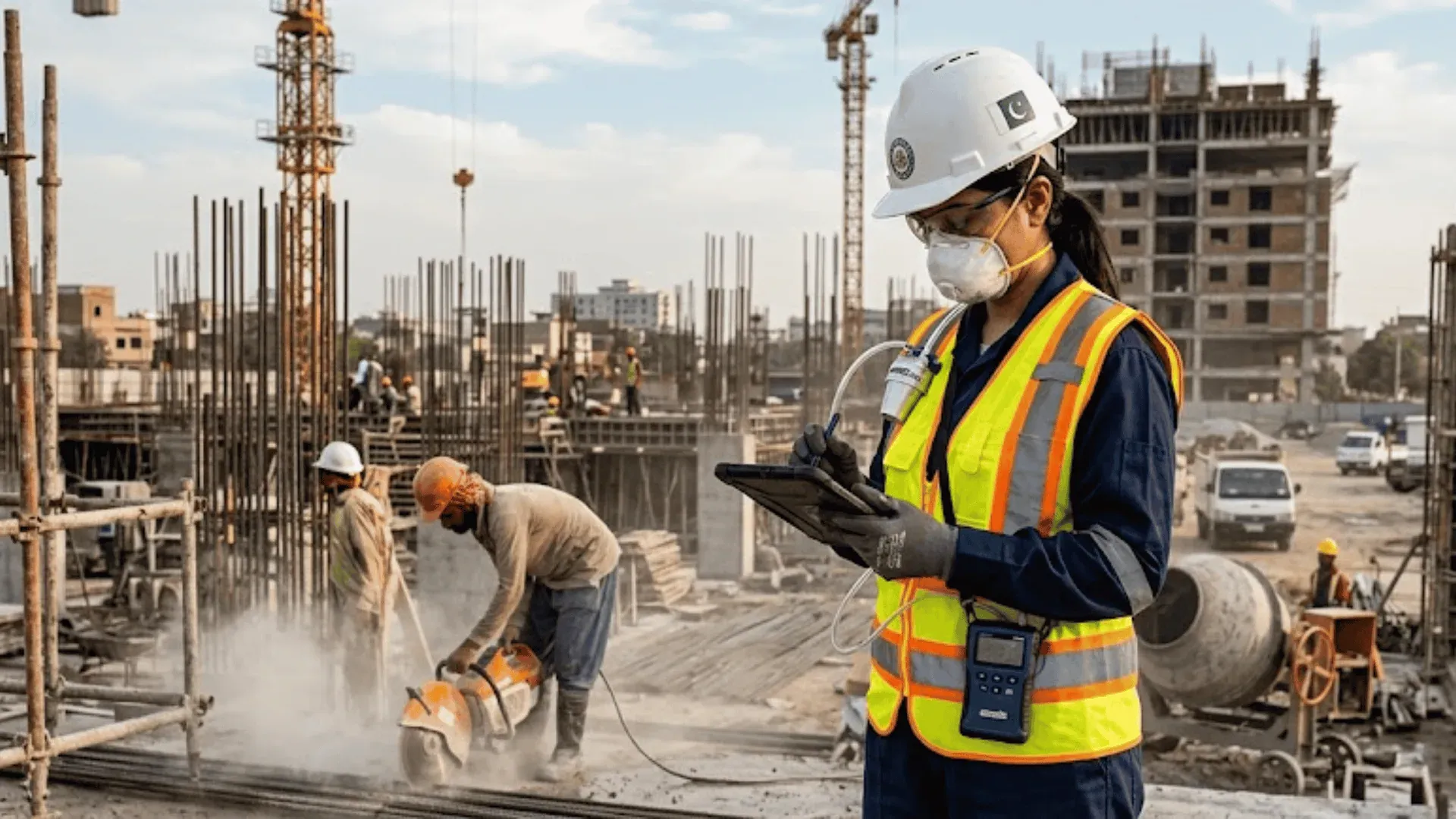
Respirable crystalline silica is found in stone, rock, sand, concrete, brick, mortar and many manufactured stone products. When these materials are cut, drilled, ground or crushed, fine silica dust is released into the air. Breathing in this dust causes silicosis, a progressive and incurable lung disease. It can also cause lung cancer and kidney disease.
Australia has seen a surge in accelerated silicosis cases, particularly among workers cutting engineered stone benchtops. The workplace exposure standard for RCS was reduced to 0.05 mg per cubic metre in response. Monitoring is essential to verify that controls are working.
Our monitoring uses personal sampling pumps with cyclone separators that collect the respirable fraction of airborne dust. Samples are analysed by NATA accredited laboratories using X ray diffraction to determine the crystalline silica content.
We sample workers performing tasks with the highest potential for silica exposure. This includes cutting, grinding, drilling and polishing of stone, concrete and masonry products. We also conduct area monitoring to assess background exposure levels and evaluate the effectiveness of dust suppression systems.
If your workers process, cut or work with stone, concrete, brick, tiles, pavers, engineered stone or any silica containing material, you need silica monitoring. This applies across construction, demolition, mining, quarrying, tunnelling, manufacturing and stonemasonry.
Even workers who do not directly cut or process these materials can be exposed through proximity to dusty operations. Our monitoring identifies all workers at risk, not just the obvious ones.
Effective silica management requires more than just measuring exposure levels. It needs a combination of engineering controls, safe work practices, health surveillance and respiratory protection. Our reports provide specific recommendations tailored to your operations.
Pair silica monitoring with our general dust monitoring service for a comprehensive assessment. If respiratory protection is part of your control strategy, fit testing is mandatory to ensure adequate protection. Our health and hygiene management plans can help you develop a structured approach to silica management across your business.
Australia experienced a public health crisis when young kitchen benchtop workers began presenting with accelerated silicosis in their 20s and 30s. Engineered stone products contain silica concentrations of 90 percent or more, compared to around 25 percent in natural stone. Dry cutting, grinding and polishing of these products generates extremely fine silica dust at concentrations that overwhelm respiratory protection and cause disease within years rather than decades.
The Australian government took the extraordinary step of banning the supply, manufacture, processing and installation of engineered stone benchtops, panels and slabs from 1 July 2024. This is the first time a product has been banned under national WHS laws. Workers currently employed in stonemason roles remain at risk from legacy processes and from silica in other stone products.
For businesses in construction, mining and other industries working with silica containing materials other than engineered stone, strict controls remain mandatory. The ban on engineered stone does not change the obligation to manage silica exposure from concrete, brick, sandstone, granite and other silica bearing materials used across these industries.
Health surveillance is a key part of silica risk management. Chest X-rays or CT scans at defined intervals allow early detection of silicotic changes before workers become symptomatic. Early detection does not reverse the damage, but it does allow workers to be removed from exposure before further harm accumulates. We advise on appropriate health surveillance arrangements as part of every silica assessment.
Silica is silicon dioxide (SiO2), a mineral found in most rocks, sand and soil. Crystalline silica refers to the structured forms of silica, primarily quartz. Respirable crystalline silica is the fraction of crystalline silica small enough to be inhaled and reach the deepest parts of the lungs. Only the respirable fraction causes silicosis and lung cancer. The workplace exposure standard of 0.05 mg/m3 applies specifically to the respirable fraction.
Silicosis is scarring of the lung tissue caused by inhaled crystalline silica. The body cannot break down or remove silica particles, and the ongoing inflammatory response progressively scars the lung. There is no cure. Mild silicosis can be managed but not reversed. Severe silicosis is permanently disabling and can be fatal. Prevention through dust control and exposure monitoring is the only effective response.
Dry cutting or grinding concrete, brick, tiles and stone generates the highest concentrations. Jackhammering, core drilling and abrasive blasting of concrete and masonry are also high exposure tasks. Dust suppression using water significantly reduces exposure but does not always bring levels within the standard without additional controls. Wet cutting of stone and concrete is one of the most effective control measures available.
The supply, manufacture, processing and installation of engineered stone products was banned nationally from 1 July 2024. Workers in stonemason trades need to be aware of this ban and the transition to natural stone and alternative materials. Silica exposure risks from natural stone and other silica containing materials remain subject to WHS monitoring and control obligations.
Safe Work Australia recommends baseline health surveillance before commencing silica exposed work, followed by periodic reviews every 2 to 5 years depending on exposure levels. A departure medical should be conducted when a worker finishes silica exposed employment. Health surveillance involves respiratory questionnaires, lung function testing and chest imaging. We advise on appropriate programs based on your exposure assessment results.