
Have a question or planning a project? Contact our team for expert guidance and reliable support.
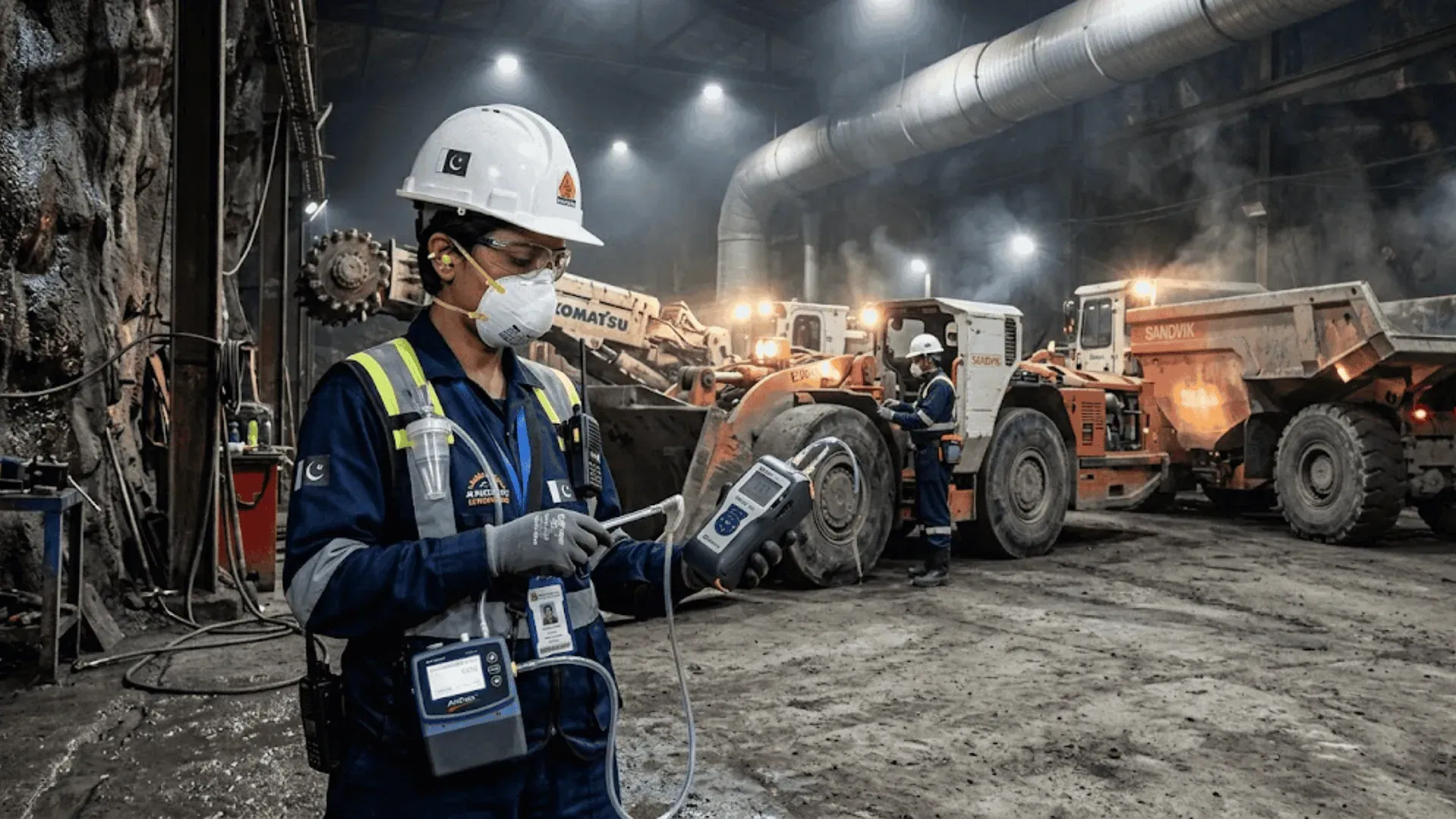
Dust exposure is a silent occupational health hazard. Workers may not notice the effects for years, but prolonged exposure to certain dusts can cause irreversible lung disease. Respirable dust, the fraction small enough to reach deep into the lungs, is the biggest concern.
Our dust exposure monitoring services measure both inhalable and respirable dust fractions in your workplace. We identify who is at risk, how much exposure they are getting and what controls need to be in place.
Not all dust is the same. Some dusts are nuisance particles with relatively low risk. Others, like respirable crystalline silica, are classified carcinogens with strict exposure limits.
We monitor for total inhalable dust, respirable dust fractions, wood dust, grain dust, coal dust, mineral dusts and specific hazardous dusts as needed. The type of analysis depends on what materials your workers handle and what processes generate the dust.
Personal sampling pumps with size selective sampling heads are worn by workers during their normal duties. This captures the actual dust exposure for that individual across their shift. We also conduct area monitoring to identify dust sources and evaluate control effectiveness.
Samples are sent to NATA accredited laboratories for gravimetric analysis and, where required, specific composition analysis. Results are compared against the current Safe Work Australia Workplace Exposure Standards.
Our reports clearly state whether exposures are within acceptable limits. Where they are not, we provide specific recommendations. This might include improved ventilation, process changes, wet suppression methods or appropriate respiratory protection.
For workplaces where dust and other airborne hazards coexist, consider combining dust monitoring with our air quality monitoring service. If respiratory protection is already in use, our respirator fit testing ensures it is actually protecting your workers.
Industries with significant dust risks include construction, mining, quarrying, manufacturing, woodworking and agriculture. If your workers generate or work near dust, monitoring is not optional. It is essential.
Measuring dust exposure is the first step. Understanding what to do about it is the next. Effective dust control requires applying the hierarchy of controls systematically. Elimination removes the source entirely. Substitution replaces a dusty process or material with a less hazardous one. Engineering controls capture or suppress dust at the source. Administrative controls limit exposure time. Respiratory protection is the last line of defence.
We help businesses develop dust control strategies that are practical for their specific operations. Wet suppression for cutting and grinding. Local exhaust ventilation for stationary processes. Enclosed cabs for mobile equipment operators. Dust collectors and bag filters for production lines. Each solution is matched to the specific source and work environment.
For construction sites, dust management plans are required under many state regulations for demolition and construction activities that disturb silica containing materials. We develop dust management plans that satisfy regulatory requirements and provide practical guidance for site supervisors and workers.
Agricultural businesses face dust exposure from grain handling, harvesting and livestock facilities. Organic dust can cause occupational asthma and hypersensitivity pneumonitis in addition to the nuisance effects. We assess agricultural dust exposures and help develop practical control programs for farm and agribusiness operations.
Inhalable dust is the fraction that enters the nose and mouth and can deposit anywhere in the respiratory tract. Respirable dust is the finer fraction that penetrates deep into the lungs where gas exchange occurs. Respirable dust is generally more hazardous because it reaches the most sensitive parts of the respiratory system. Most hazardous dusts, including silica, have separate exposure standards for both fractions.
Dust monitoring specifically measures particulate matter using gravimetric methods that weigh the collected particles. Air quality monitoring is a broader term covering gases, vapours and particulates. For dust specifically, gravimetric sampling with size selective samplers is the standard method used to assess compliance with dust exposure standards.
The appropriate respiratory protection depends on the type of dust, the concentration and the duration of exposure. Surgical masks provide minimal protection against fine dusts. P1 respirators filter coarse dust. P2 respirators filter fine dust including silica, asbestos and wood dust. P3 full face respirators are required for very high concentrations. Fit testing is essential for all respirator types.
Standard gravimetric monitoring measures the total mass of dust collected but not its composition. Where the specific composition matters, such as determining the silica content of mixed dust, additional laboratory analysis is required. We specify the appropriate analysis method based on the hazards present in your workplace.
Yes. Safe Work Australia has specific guidance on managing respirable crystalline silica dust in construction, demolition and related industries. Many states have adopted specific silica dust management requirements for these industries. Our RCS monitoring service is specifically designed to assess compliance with the current 0.05 mg/m3 exposure standard.