
Have a question or planning a project? Contact our team for expert guidance and reliable support.
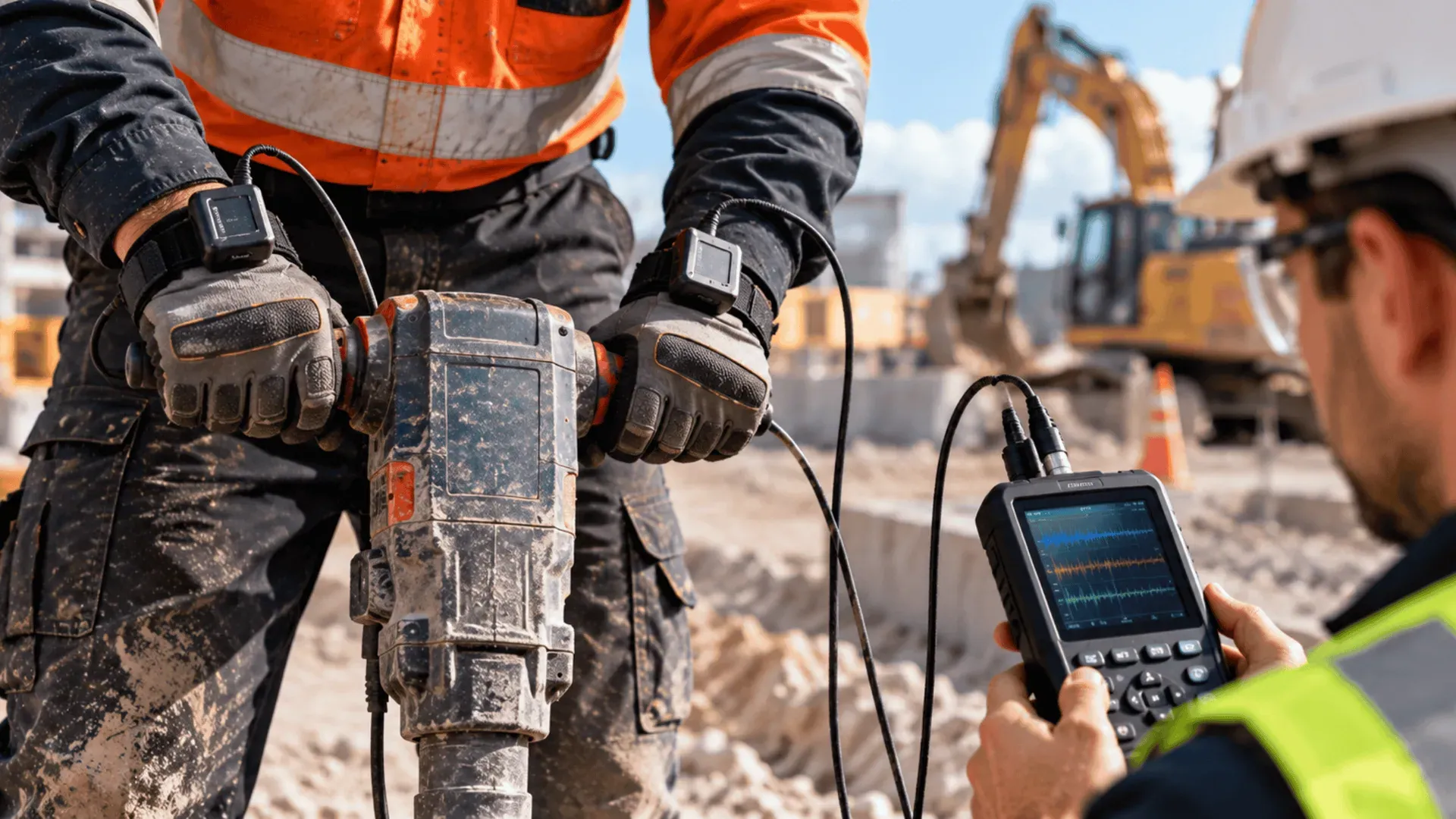
Workers who regularly use vibrating tools and equipment are at risk of developing Hand Arm Vibration Syndrome (HAVS). This condition damages blood vessels, nerves, muscles and joints in the hands and arms. Symptoms include tingling, numbness, loss of grip strength and pain. In severe cases, the damage is permanent.
Our hand arm vibration assessments measure the vibration levels workers are exposed to and evaluate whether current controls are adequate to prevent injury.
We measure vibration magnitude at the tool handle using accelerometers while workers perform their normal tasks. The measurements are combined with daily exposure duration to calculate the total vibration dose expressed as A(8), the daily exposure standardised to an 8 hour period.
Results are compared against the exposure action value and exposure limit value from relevant guidance. We assess each tool and task combination separately because vibration levels vary significantly between different equipment and operating conditions.
Angle grinders, impact wrenches, jackhammers, chainsaws, needle scalers, concrete breakers, riveting guns and powered sanders are among the most common sources of hazardous vibration. Even tools that feel relatively smooth in operation can generate vibration levels that cause harm over time.
Industries with high HAV risk include construction, mining, demolition, automotive repair, forestry, manufacturing and maintenance operations.
Our reports recommend specific actions to reduce vibration exposure. This might include substituting lower vibration tools, limiting daily exposure time, rotating workers between vibrating and non vibrating tasks, using anti vibration gloves and implementing tool maintenance programs.
We also advise on health surveillance arrangements for exposed workers. Early detection of HAVS symptoms through regular health monitoring gives workers the best chance of preventing permanent damage.
Hand arm vibration assessment is often conducted alongside other ergonomic assessments. Our manual handling evaluations and noise monitoring address the other physical hazards commonly found in the same work environments. For workplaces with multiple health hazards, our health and hygiene management plan ties everything together.
HAVS develops slowly. Early symptoms including intermittent tingling and numbness in the fingers are easy to dismiss or attribute to other causes. By the time workers notice significant symptoms, damage has already accumulated over years. Health surveillance catches changes early when removing the worker from exposure can prevent further progression.
A HAVS health surveillance program includes a baseline assessment before commencing vibration exposed work, periodic follow up assessments at intervals determined by exposure level, and a departure assessment when the worker leaves the role. Assessments involve a structured questionnaire, an examination of hand and finger circulation and nerve function, and in advanced cases cold provocation testing.
Results of individual health surveillance assessments are confidential to the worker and their doctor. Aggregate results can inform the hygiene program. A pattern of early HAVS findings in workers using a particular tool is a clear signal that controls for that tool need to be strengthened.
Vibration tool maintenance is often overlooked as a control measure. Worn bearings, unbalanced grinding wheels, damaged handles and worn damping materials all increase vibration transmitted to the hand. A simple tool maintenance program that keeps equipment in good condition reduces vibration exposure at no additional cost. We advise on maintenance standards as part of every vibration assessment.
HAVS is a collective term for the vascular, neurological and musculoskeletal effects of prolonged hand arm vibration exposure. Vascular effects cause the fingers to lose circulation and turn white in cold conditions, a condition called vibration white finger. Neurological effects cause tingling, numbness and loss of sensation. Musculoskeletal effects cause weakness and joint problems. HAVS is progressive and the damage is permanent once significant disease develops.
Percussive tools like jackhammers, needle scalers, chipping hammers and impact wrenches tend to generate very high vibration levels. Rotary tools like angle grinders, random orbital sanders and chainsaws also carry significant risk. The risk depends on both the vibration magnitude and the daily exposure duration. A tool with moderate vibration used for many hours per day can accumulate the same dose as a very high vibration tool used briefly.
The EU Physical Agents Vibration Directive, which many Australian businesses reference, sets an exposure action value of 2.5 m/s2 A(8) and an exposure limit value of 5 m/s2 A(8). Safe Work Australia guidance references similar values. Above the action value, controls must be implemented. Above the limit value, exposure must be reduced immediately regardless of controls already in place.
Anti-vibration gloves reduce high frequency vibration but are generally ineffective at reducing the lower frequency vibration components most associated with HAVS. They provide some benefit but cannot be relied upon as a primary control. Engineering controls like vibration isolated tool handles, reduced exposure times and tool substitution are more effective. Gloves can supplement but not replace these controls.
Yes. WHS regulations require that records of hazardous exposures be maintained. Vibration exposure records should include tool vibration data, daily exposure time for each tool, calculated daily vibration doses and health surveillance results. These records help demonstrate due diligence, manage compensation liability and track improvement over time as controls are implemented.