
Have a question or planning a project? Contact our team for expert guidance and reliable support.
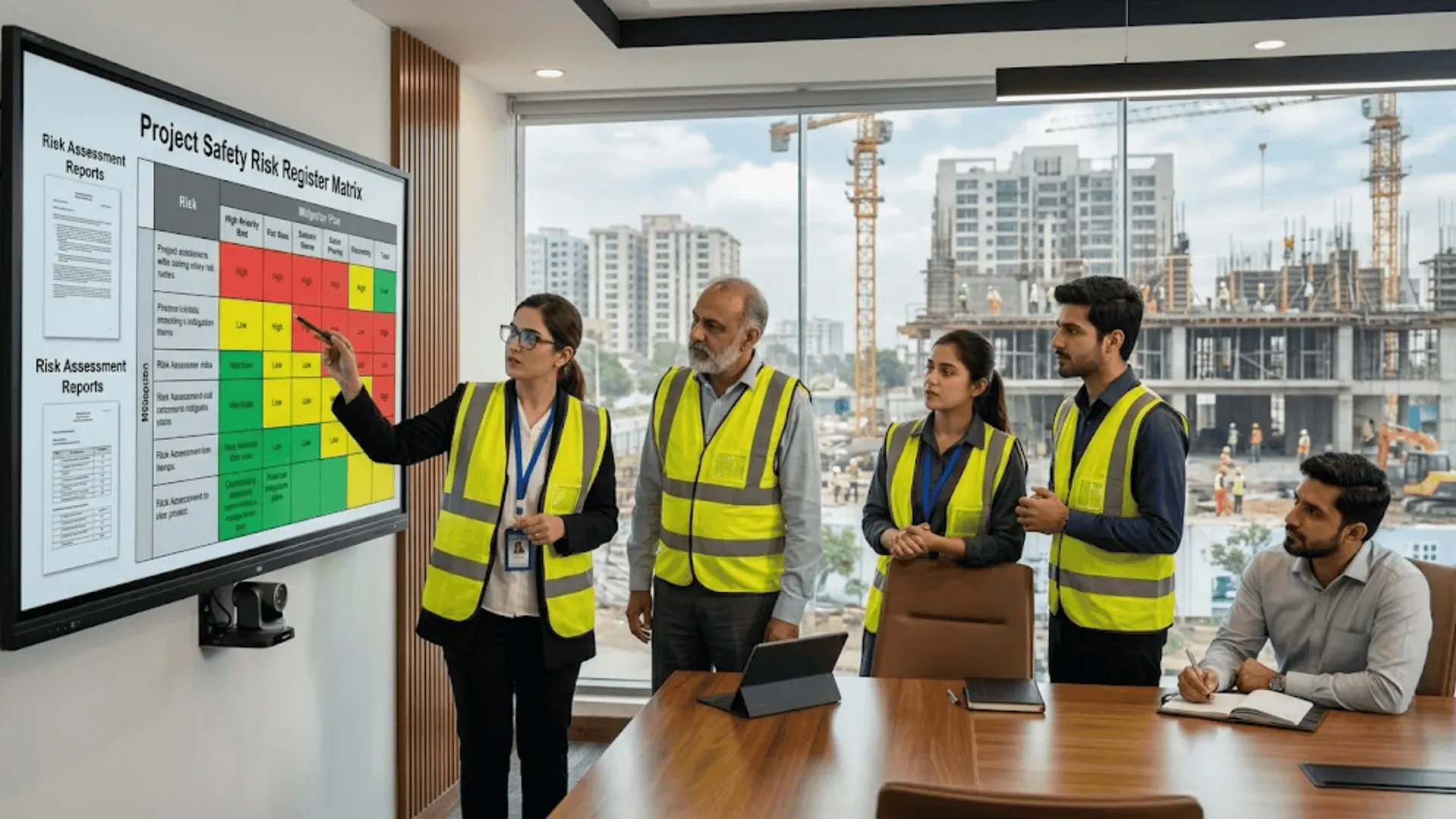
Every workplace has hazards. The question is whether you have identified them, assessed the risk they present and put adequate controls in place. A well maintained risk register is the foundation of effective safety management.
We help businesses develop and maintain risk registers that are practical, current and aligned with the hierarchy of controls. Not a dusty spreadsheet that nobody opens. A living document that drives real decisions on site.
We start by identifying hazards through site inspections, task analysis, worker consultation and review of incident data. Every hazard is then assessed for likelihood and consequence to determine the risk rating.
Controls are evaluated against the hierarchy of controls. Elimination first, then substitution, engineering controls, administrative controls and finally personal protective equipment. We challenge existing controls to make sure they are adequate and not just convenient.
Your risk register should be easy to use and update. We build registers that your supervisors and managers can maintain without needing a safety degree. Clear language. Simple formats. Logical structure.
We also set up review schedules so the register stays current. New tasks, new equipment, changes in legislation or a workplace incident should all trigger a review. We build that process into the register itself.
If you have not reviewed your risk register in the last 12 months, it is overdue. If you have introduced new processes, equipment or chemicals, the register needs updating. After any significant incident, the relevant risks should be reassessed.
Our risk assessment services work alongside our workplace audit and safety management system offerings. Together they give you a comprehensive approach to managing workplace safety. For sites with occupational hygiene risks, our air quality monitoring and noise monitoring services provide the exposure data you need for accurate risk assessments.
In addition to workplace level risk registers, many businesses benefit from activity specific risk assessments for high risk tasks. Working at heights, confined space entry, hot work, lifting operations, electrical work and chemical handling all warrant dedicated risk assessments that go deeper than a general register entry.
These detailed risk assessments form the basis for Safe Work Method Statements and specific work instructions. They are the documents your supervisors reference when planning and briefing workers before high risk tasks begin.
We develop these documents in consultation with the people who do the work. Your experienced tradespeople and operators know the nuances of the specific tasks they perform. Combining their practical knowledge with our risk assessment expertise produces documents that are both technically sound and practically useful.
For businesses with significant numbers of hazardous chemicals, chemical risk assessments integrated into your risk register provide a complete exposure management framework. This connects directly to our hazardous chemical management audit and air quality monitoring services for workplaces where inhalation exposure is a concern.
A risk register should identify the hazard, describe the potential harm, assess the risk without controls in place, list the current controls, assess the residual risk with controls applied and identify any additional actions required. It should record who is responsible for the controls and when the risk was last reviewed.
Most Australian businesses use a 5x5 likelihood and consequence matrix aligned with AS/NZS ISO 31000. The specific matrix is less important than using it consistently. We help you select and apply a matrix that suits your operations and makes risk rating decisions clear and repeatable across your team.
Worker consultation is a legal requirement under WHS legislation, not just good practice. We facilitate risk assessment workshops that bring together workers, supervisors and managers. Workers who perform the tasks every day identify hazards and practical controls that desk based assessments miss. The resulting risk assessments have better buy in and are more practically useful.
Risk assessments should be reviewed at least annually and whenever there is a change to the task, process, equipment or workplace layout that might affect the risks. A workplace incident or near miss relevant to the assessed task should also trigger an immediate review.
Residual risk is the risk that remains after all current controls are in place. It tells you whether your controls are bringing the risk to an acceptable level. If the residual risk is still high despite multiple controls, you need to consider whether additional controls or a fundamental change to how the task is performed is required.