
Have a question or planning a project? Contact our team for expert guidance and reliable support.
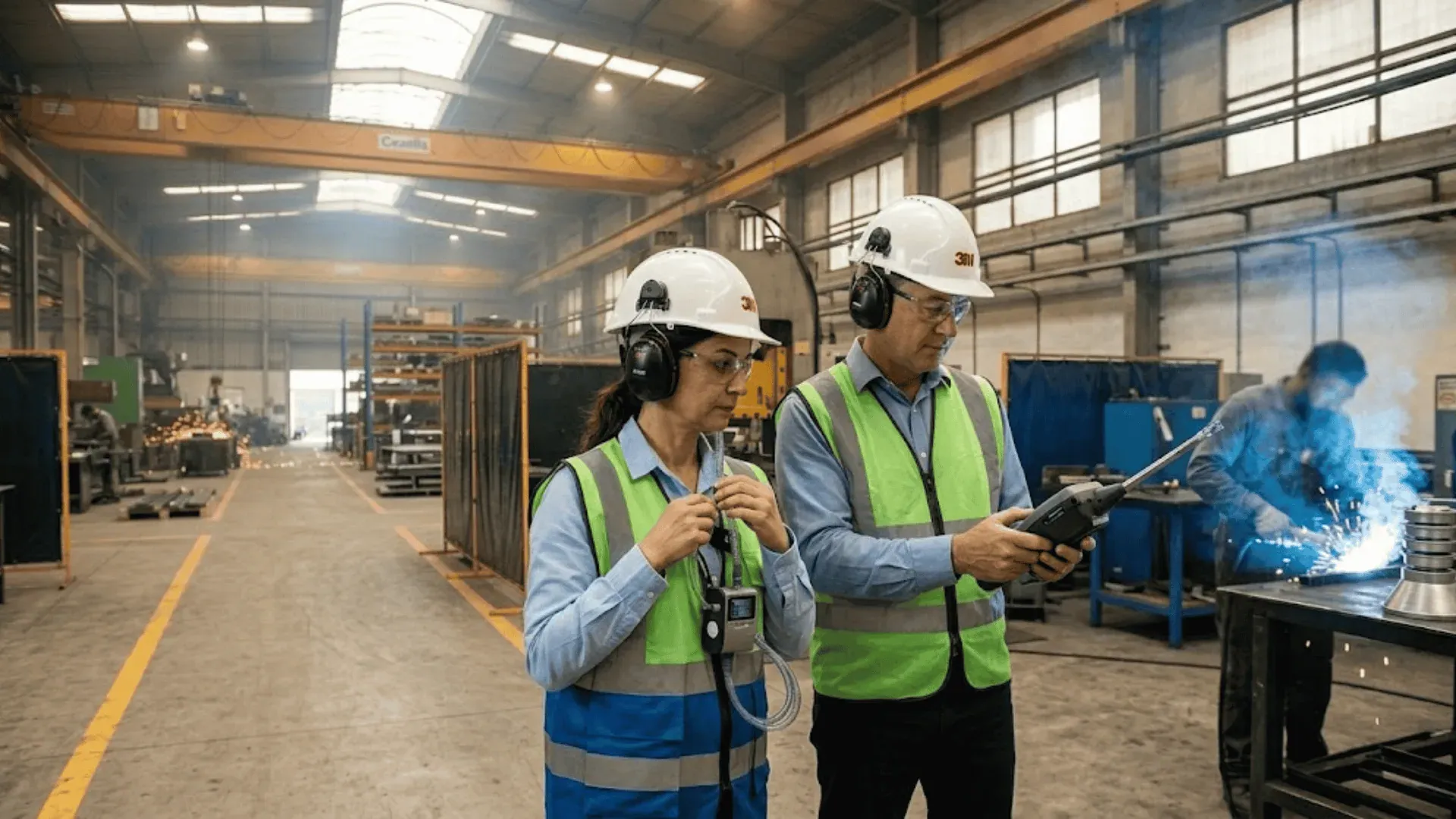
Welding generates a complex mix of metal fumes and gases that can cause significant health problems. Short term effects include metal fume fever, respiratory irritation and eye damage. Long term exposure is linked to lung cancer, manganism and other chronic conditions.
In 2017, the International Agency for Research on Cancer classified welding fumes as a Group 1 carcinogen. That changed the game for every workshop and fabrication shop in Australia. Exposure controls that used to be considered adequate may no longer meet the standard.
Our welding fume assessments measure total fume exposure and individual metal constituents. This includes manganese, chromium (including hexavalent chromium for stainless steel welding), nickel, zinc, iron and other metals depending on the base materials and consumables used.
We also assess exposure to welding gases including ozone, nitrogen dioxide and carbon monoxide. The full picture matters because different welding processes and materials produce different hazard profiles.
Personal air monitoring is the core of every assessment. Sampling pumps with appropriate filter media are worn by welders during their normal work activities. We sample across different welding processes, materials and work positions to capture the full range of exposures.
Results are analysed by NATA accredited laboratories and compared against the current Safe Work Australia Workplace Exposure Standards for each contaminant.
Our reports do not just give you numbers. We tell you which welding tasks and processes present the highest risk and what controls will bring exposures down effectively. Recommendations might include improved local exhaust ventilation, changes to consumables, modified work practices or respiratory protection.
If respiratory protection is part of your control strategy, fit testing is essential to make sure it works properly. We also support broader workplace hygiene through our health and hygiene management plan service.
Whether you run a small fabrication shop or a large structural steel operation, welding fume assessment protects your workers and demonstrates compliance with your WHS duties.
Welding on stainless steel deserves special attention. Stainless steel contains chromium, and welding generates hexavalent chromium (Cr VI) in the fume. Hexavalent chromium is a Group 1 carcinogen with a very low workplace exposure standard of 0.01 mg per cubic metre. Stainless steel welders face significant health risks if their exposure is not properly controlled.
Many businesses that weld stainless steel are not aware of the specific risks or the very low exposure limit that applies. Standard respiratory protection adequate for mild steel welding fume may not provide sufficient protection for stainless steel welding. We assess stainless steel welding specifically and provide recommendations tailored to the hexavalent chromium risk.
Manual metal arc welding, MIG welding, TIG welding and flux core arc welding all generate different fume compositions and at different rates. Our assessments cover all welding processes and materials used in your workshop to give a complete picture of fume exposure across your operations.
Post assessment, we work with your team to implement practical controls. This typically involves a combination of improved local exhaust ventilation, modification of welding positions and parameters, substitution of consumables where feasible and appropriate respiratory protection with fit testing for remaining residual exposures.
The workplace exposure standard for general welding fume (as total particulate, not otherwise classified) is 1 mg per cubic metre as an 8 hour time weighted average. However, individual metal constituents in the fume have their own specific standards. Manganese has a standard of 0.1 mg/m3, hexavalent chromium 0.01 mg/m3 and nickel 0.1 mg/m3 for soluble compounds.
If you can see fume building up in the breathing zone of the welder, ventilation is not adequate. But even invisible fume levels can exceed exposure standards. Visible assessment is not reliable. Air monitoring during welding activities is the only way to know whether exposures are within safe limits. Our LEV assessment service can also verify ventilation system performance.
Supplier data on fume generation rates can be useful background information, but it does not replace workplace monitoring. Real world exposures depend on the specific welding parameters used, the work position, the ventilation conditions, the size of the workspace and many other factors that vary from one workplace to another.
For general welding, a P2 half face respirator or better provides basic protection. For stainless steel welding where hexavalent chromium is generated, a P3 half face or full face respirator is typically required. The specific selection depends on the measured exposure level and the required protection factor. Always follow up with fit testing to confirm adequate seal.
Yes. PCBUs have a duty to identify and control health risks from welding fumes under WHS regulations. Given the 2017 reclassification of welding fumes as a Group 1 carcinogen, regulators pay close attention to this hazard. Exposure monitoring is the accepted method for determining whether controls are adequate.